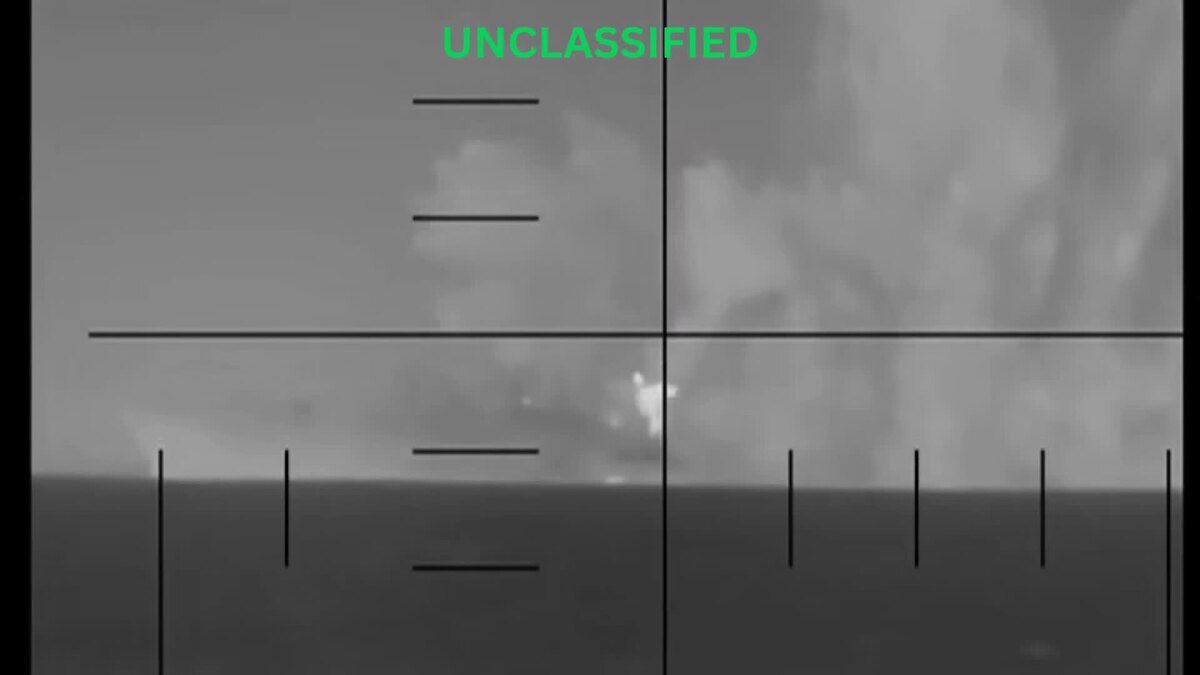
The vast expanse of the Indian Ocean, a crucial artery for global trade and strategic power projection, became the stage for a naval event of profound historical significance on March 4, 2026. The sinking of the Iranian Navy frigate IRIS Dena by the United States Navy's nuclear-powered submarine USS Charlotte marked a chilling return to a form of naval combat rarely seen since the World Wars. This incident, occurring amidst the escalating tensions of the 2026 Iran War, not only claimed numerous lives but also reverberated across geopolitical landscapes, sparking debates on international law, rules of engagement, and the future of naval warfare. For many seeking to understand the intricacies of this event, often beginning with an Iris Dena Wiki search, the story extends far beyond mere factual bullet points, delving into a complex narrative of ambition, conflict, and tragic consequences.
A Historic Naval Engagement: The Sinking of IRIS Dena
The circumstances surrounding the sinking of the IRIS Dena are as historically rare as they are tragically impactful. On that fateful day, the Iranian frigate was returning home after participating in the multilateral naval exercise MILAN 2026, hosted by India. A routine voyage, made in international waters approximately 19 nautical miles (35km; 22mi) off the coast of Galle, Sri Lanka, suddenly turned into a combat zone.
The USS Charlotte, a formidable Los Angeles-class submarine commanded by Commander Thomas Futch, intercepted the Dena. The attack was swift and decisive: the Charlotte fired two advanced Mark 48 torpedoes at the Iranian vessel. One of these sophisticated weapons found its mark, critically damaging the frigate and leading to its rapid demise. This single torpedo strike carried immense weight, as it represented:
- The first instance of a nuclear-powered submarine sinking an enemy surface vessel since the Royal Navy's HMS Conqueror torpedoed the Argentine cruiser ARA General Belgrano during the Falklands War in 1982. This highlights the enduring, stealthy threat posed by modern submarines.
- The first such naval action by a US Navy submarine since the intensely fought Pacific Theater of World War II, breaking a nearly eight-decade-long hiatus in direct combat kills against enemy surface ships.
- Only the fourth ship to be sunk by a torpedo since 1945, underscoring the extreme rarity of such an event in contemporary naval history.
- A rare and highly contentious example of an attack on a foreign warship not actively taking part in open hostilities, further complicating the legal and ethical ramifications of the incident.
The backdrop of the 2026 Iran War provided the kinetic context, with the Pentagon later describing the attack as targeting an "enemy combatant." However, the fact that the Dena was returning from a diplomatic exercise and was not actively engaged in hostilities at the time fueled significant international controversy. This engagement serves as a stark reminder of the devastating capabilities of modern naval assets and the fine line between peace and conflict in contested international waters.
Anatomy of IRIS Dena: Iran's Indigenous Naval Ambitions
To truly understand the significance of the IRIS Dena's loss, one must look at what the vessel represented for Iran's naval capabilities and its strategic ambitions. The IRIS Dena (hull number 75) was a Mowj-class (also known as Moudge-class) guided-missile frigate, a product of Iran's determined push for indigenous defense production. Constructed domestically at the Shahid Darvishi yard near Bandar Abbas, it symbolized Iran's ambition to overcome decades of international arms embargoes and sanctions.
The Mowj-class program was Iran's strategic answer to its inability to import advanced naval platforms from traditional suppliers. It aimed to foster domestic shipbuilding expertise, leveraging reverse-engineered foreign technologies and homegrown innovations to bridge critical capability gaps. The lead ship of the class, IRIS Jamaran, entered service in 2010 after a protracted development, demonstrating the challenges Iran faced in precision manufacturing and subsystem integration without external assistance.
The IRIS Dena was equipped with a suite of indigenous systems designed to project Iranian naval power:
- Qader anti-ship missiles: Providing offensive surface-to-surface strike capabilities.
- Sayyad surface-to-air missiles: Offering defensive capabilities against aerial threats.
- A 76 mm naval gun: A versatile weapon for both surface engagement and air defense.
- Anti-submarine torpedoes: For its own anti-submarine warfare (ASW) defense.
- Asr phased-array radar: An advanced system for detection and targeting.
While featuring a helipad, a key asset for naval operations, the Dena notably lacked a hangar or vertical launch system (VLS) for enhanced air defenses, a design choice that highlighted the compromises inherent in Iran's self-reliance efforts. Despite these limitations, the Dena had demonstrated Iran's growing blue-water capabilities through significant long-range deployments.
One such voyage between 2022–2023 saw the Dena, supported by the vessel IRIS Makran, circumnavigate the globe, traversing the Indian Ocean, South Pacific, around Cape Horn, and into the Atlantic, with port calls in Brazil and South Africa – a clear signal of Iran's intent to project naval power far beyond its immediate region, often defying U.S. diplomatic protests. The ship's participation in MILAN 2026, a multinational exercise, further underscored Iran's desire for international naval engagement, even as it remained under U.S. sanctions targeting its maritime assets. For a deeper dive into Iran's naval aspirations and the Mowj-class frigates, consider reading Mowj-Class Frigates: IRIS Dena's Final Voyage and Iran's Naval Goals.
Controversy and Consequences: The Aftermath of the Sinking
The immediate aftermath of the IRIS Dena's sinking was marked by tragic human loss and a swirling vortex of international controversy. Aboard the frigate were approximately 180 people, including members of the Iranian Navy band who had likely performed at the MILAN 2026 exercise. The torpedo strike was devastating; at least 87 lives were lost. Sri Lanka's navy, reacting to the disaster off its coast, recovered 87 bodies and managed to rescue 32 survivors, who received medical treatment at Galle National Hospital. Tragically, 61 others remained missing when search operations concluded on March 8, 2026.
The humanitarian crisis quickly gave way to a complex legal and diplomatic quandary. The United States justified the attack within the context of the ongoing 2026 conflict, labeling the Dena an "enemy combatant." However, critical details raised profound questions:
- International Waters: The attack occurred in international waters, a fact that in itself does not preclude military action during wartime, but the circumstances surrounding the Dena's activities were unique.
- Diplomatic Invitation: The Dena was returning from a multilateral naval exercise hosted by India, an event under diplomatic invitation. This raises questions about the status of a warship participating in such events during times of broader conflict.
- "Unarmed" Status: While a warship by design, reports from Grokipedia suggested the ship was "unarmed" at the time of the exercise, likely implying it was not actively armed for combat or posing an immediate threat, though its intrinsic weapon systems remained. This distinction is crucial in debates over rules of engagement.
- Lack of Independent Verification: Official U.S. statements provided the primary account, with independent verification of some details remaining scarce, further fueling suspicion and debate, particularly from Iran.
This incident profoundly impacted regional stability. It underscored the aggressive posture taken by the U.S. Navy in the conflict and signaled a willingness to engage in high-risk operations. For Iran, it was a humiliating blow to its indigenous naval program and its aspirations for blue-water power projection. The loss of life and the flagship nature of the vessel within its class represented a significant setback.
Beyond the immediate ramifications, the sinking of the IRIS Dena ignited critical discussions among military strategists and international law experts. It highlighted the continued relevance of submarine warfare in anti-surface engagements and raised questions about modern rules of engagement, especially concerning vessels returning from diplomatic, non-belligerent activities. The incident will undoubtedly shape future naval doctrines and international maritime law. To delve deeper into the controversies and broader context of the Iran War, explore Iran War: The Sinking of IRIS Dena and its Controversies.
Conclusion
The sinking of the IRIS Dena stands as a stark and somber milestone in naval history. It not only marks the first combat kill by a U.S. submarine since World War II and the first by a nuclear submarine since the Falklands War but also serves as a potent reminder of the escalating risks in an increasingly volatile world. The incident is a tragic confluence of geopolitical tensions, advanced military technology, and the inherent dangers faced by naval personnel. While a simple Iris Dena Wiki entry can provide the basic facts, understanding the full scope requires acknowledging the human cost, the geopolitical fallout, and the profound questions it raises about the future of maritime conflict. As nations continue to develop their naval capabilities and project power across the globe, the lessons of the IRIS Dena's final voyage will undoubtedly resonate, shaping strategic thinking and international relations for years to come.